

Unemployable Graduate
Advertisement
  • Home
  • Education
  • Economics
  • Public Policy
  • Workforce
  • Videos
  • Privacy Policy
  • Contact Us
No Result
View All Result
Unemployable Graduate
  • Home
  • Education
  • Economics
  • Public Policy
  • Workforce
  • Videos
  • Privacy Policy
  • Contact Us
No Result
View All Result
Unemployable Graduate
No Result
View All Result
Home Economics

The Economic War With China

November 28, 2022
in Economics
0
The Economic War With China
189
SHARES
1.5k
VIEWS
Share on FacebookShare on Twitter


Commentary

Before wars become hot and kinetic, with missiles flying, they usually creep up into the sphere of trade and economics. Situational awareness of this dynamic is critical, so the missiles don’t surprise us if they do fly.

The norm in trade relations is mutual benefit through comparative advantage. This is the “friendly competition” that both the Trump and Biden administrations tried to achieve with China.

Donald Trump’s first move with Beijing was to call Xi Jinping a great guy and visit with a planeload of CEOs. Joe Biden tried (and failed) to roll back Trump’s tariffs in exchange for peace with China. He continues to emphasize engagement and cooperation on issues such as climate change and public health.

But Beijing isn’t playing ball. Instead, the Chinese Communist Party (CCP) persisted during both administrations in stealing U.S. technology, intellectual property, and the territory of our friends and allies. It reneged on Trump’s trade deal, including during the Biden administration.

Over the course of Trump and Biden’s administrations, both presidents got tougher after hoping for a thaw. America quietly and gradually realized we had an adversary in Beijing rather than a friendly competitor.

While neither Trump nor Biden called Beijing an enemy, both started to treat it as such by depriving it of the means to fight. This entails constricting the adversary’s economy, which is necessary to fund its military power.

One often hears a dictum of the 19th-century Prussian military theorist Carl von Clausewitz, that “war is only a continuation of state policy by other means.” Those other means are temporally prior and include diplomatic, but more consequentially, economic policy.

As the adversary reveals itself, economic policy is weaponized to inflict economic harm in preparation for war. Such measures include the attempt to impose economic hegemony on a region, control trade generally, restrict key commodities or technologies, or steal economic assets like intellectual property.
Epoch Times Photo
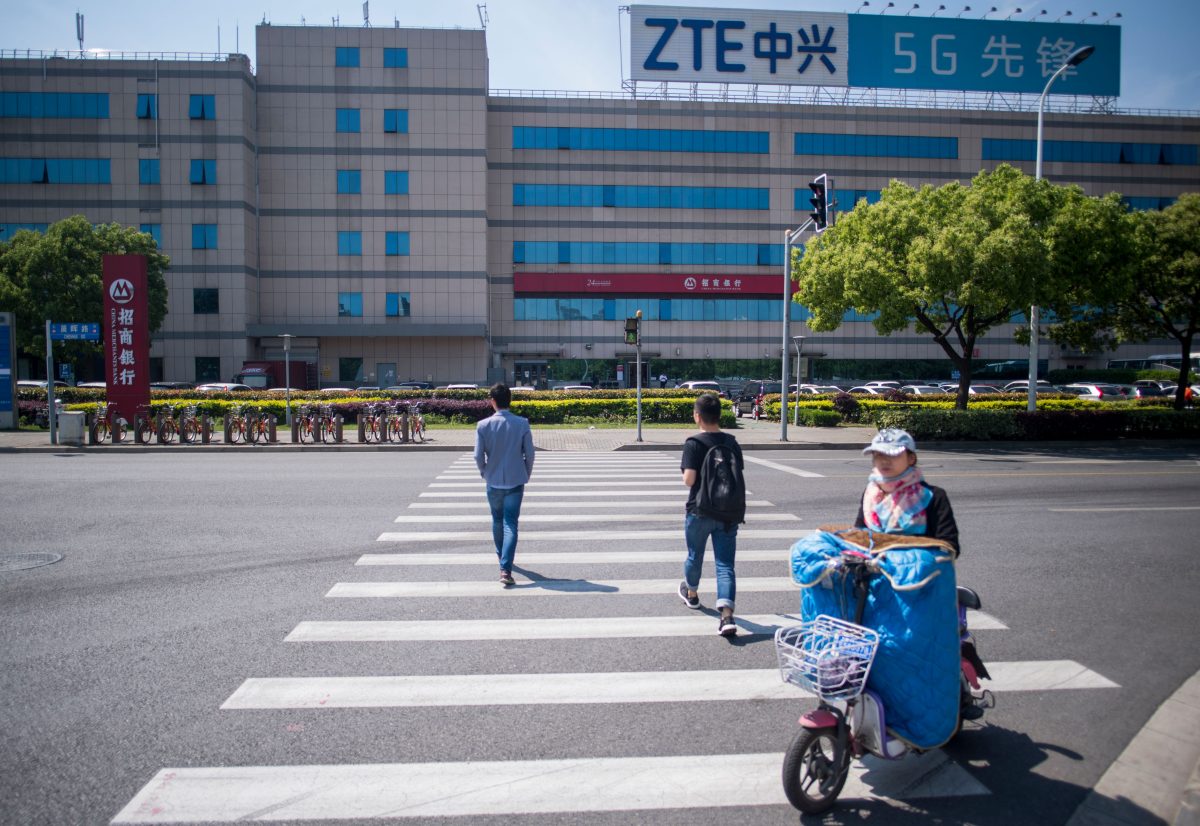
The ZTE logo on an office building in Shanghai, China, on May 3, 2018. Chinese telecom giant ZTE said its major operations had “ceased” following the U.S. ban on American sales of critical technology to the company on April 2018. (Johannes Eisele/AFP/Getty Images)

These economic measures sometimes lead to war, as with Napoleon’s 19th-century blockade to destroy British commerce and America’s 1941 oil embargo on Japan.

In the 19th century and before, most wealth came from territory, whether agriculture or industrial wealth that derived from mineral extraction and factories. In the 21st century, new wealth comes from intellectual property and high technology that can be stolen by an army of hackers rather than conquered by a division of tanks.

Yet the effect is similar—the takeover of productive assets required to maintain relative economic and military strength. Over the past few decades, China excelled at the theft of U.S. intellectual property, a theft by some estimates of as much as $600 billion annually. This does not include China’s theft of Europe’s intellectual property, and that of our Asian partners, like Japan, South Korea, and Taiwan. Those combined thefts by the CCP must be at least as great.

What technology Beijing cannot steal, it can transfer forcefully in exchange for market access to China’s 1.4 billion people. Without any vote legitimizing its power to constrict access to these 1.4 billion, the CCP arrogated to itself the status of a legitimate state that controls all of China’s trade. Lacking democratic legitimacy, it has no ethical right to do so.

Tragically, the world accepted this fraud in 1949 because the CCP controlled China militarily, and it was easier to surrender and protect U.S. and allied property and profits in China (for a short time) than to fight another war so soon after 1945. The CCP held Western investment hostage in 1949, and the West gave in to its terrorism.

But the long-term costs of negotiating with terrorists, and funding them with our trade, are now upon us. The regime in Beijing continues its old policy of seeding wars around the world against democracy, and preparing to exploit the influence networks and power vacuums that result.
Epoch Times Photo
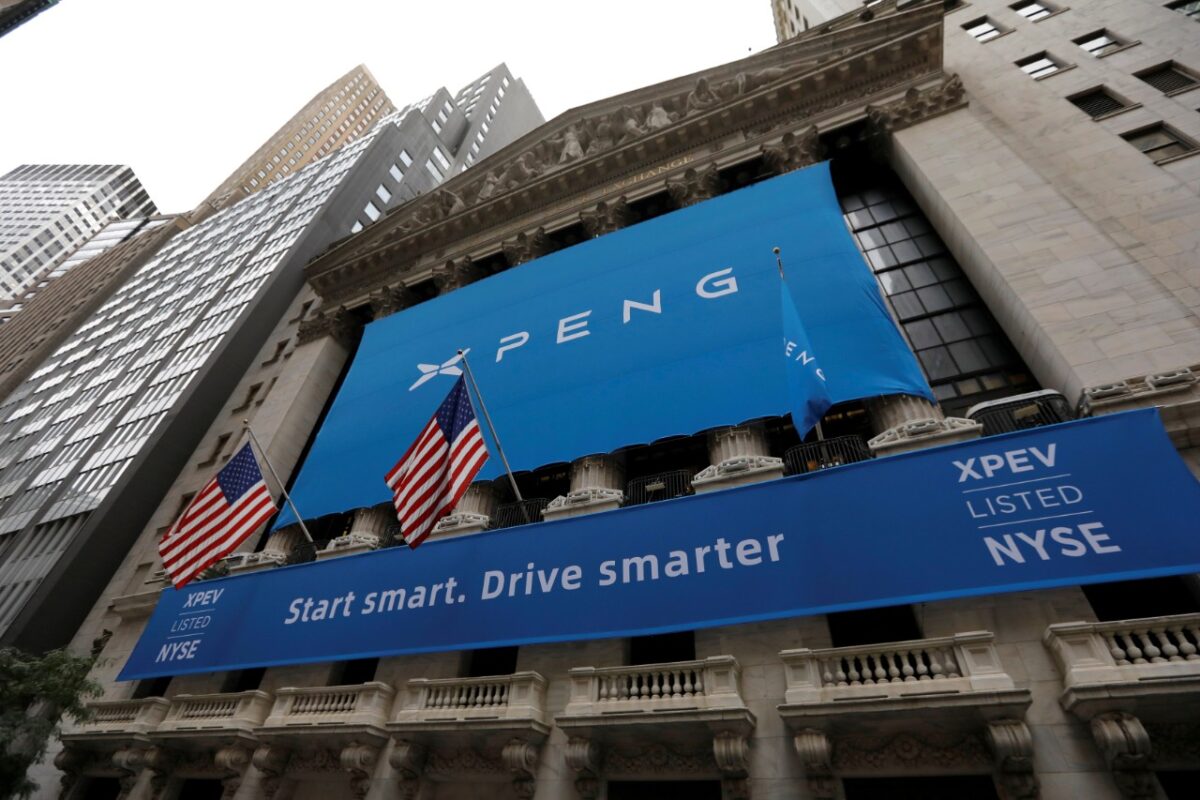
A banner announcing the Chinese vehicle manufacturer XPeng Inc. is seen outside the New York Stock Exchange (NYSE) ahead of the company’s IPO trading under the stock symbol “XPEV” in New York City on Aug. 27, 2020. (Mike Segar/Reuters)

In response, the United States and its allies are decoupling through tariffs and technology restrictions, thus depriving Beijing of the wealth of American markets.

Decoupling is a form of economic war that naturally accelerates through a downward spiral of retaliation and counter-retaliation until one side backs down, or kinetic war is reached.

After Moscow’s aggression against Ukraine, and before the West started shipping tons of lethal military aid, the United States and its allies sanctioned Russian energy exports. As Moscow continued its aggression, including against the capital city of Kyiv, economic warfare phased into the delivery of weaponry that targeted Russian soldiers directly. The range and lethality of that weaponry gradually increase as the war progresses.

With China, the United States is more cautious. At stake is $615 billion in annual two-way trade.

Economic sanctions are slowly imposed, and the weaponry the United States delivers to countries like Japan, the Philippines, and Taiwan has yet to be used directly against China’s People’s Liberation Army. Our leaders continue to meet Xi for smiles and handshakes, even as they tie the economic noose more tightly around the regime.

Both sides call each other “competitors” in “win-win” contests because as soon as they publicly admit that they are adversaries or enemies proceeding down the path of economic conflict, the deterioration of economic to kinetic war would accelerate.

Yet calling each other “competitors” in the way that Ford and Volkswagen are competitors is a lie masking the preparation for kinetic action on both sides.

Despite the risk of imposing economic harm on each other, it is, unfortunately, necessary to increase such measures against China until the CCP backs away from its various aggressions.

The CCP must first allow a full international investigation and accounting of the origins of COVID-19, cease technology theft and forced technology transfer, and relinquish all competing claims to free neighboring territories such as Taiwan, Japan’s southernmost islands, and almost the entire South China Sea. Beijing must cease its attempt to subvert the United Nations for its own totalitarian purposes.

Economic policy against the Chinese regime sends a message that we mean business without taking a step into war. These economic measures risk escalation, but that cannot be avoided without rapid and neverending concessions. The only way to defend democracy under these unfortunate conditions is, at the very least, to accept the risk that comes from decoupling.

Views expressed in this article are the opinions of the author and do not necessarily reflect the views of The Epoch Times.

Anders Corr

Follow

Anders Corr has a bachelor’s/master’s in political science from Yale University (2001) and a doctorate in government from Harvard University (2008). He is a principal at Corr Analytics Inc., publisher of the Journal of Political Risk, and has conducted extensive research in North America, Europe, and Asia. His latest books are “The Concentration of Power: Institutionalization, Hierarchy, and Hegemony” (2021) and “Great Powers, Grand Strategies: the New Game in the South China Sea” (2018).



Source link

Related articles

Economic Surprises Could Fuel Fed Deja Vu for the 2010s – The Wall Street Journal

Economic Surprises Could Fuel Fed Deja Vu for the 2010s – The Wall Street Journal

April 11, 2024
How can we tackle the UK’s housing crisis? – Economics Observatory

How can we tackle the UK’s housing crisis? – Economics Observatory

April 10, 2024
Share76Tweet47

Related Posts

Economic Surprises Could Fuel Fed Deja Vu for the 2010s – The Wall Street Journal

Economic Surprises Could Fuel Fed Deja Vu for the 2010s – The Wall Street Journal

April 11, 2024
0

Economic Surprises Could Fuel Fed Deja Vu for the 2010s  The Wall Street Journal Source link

How can we tackle the UK’s housing crisis? – Economics Observatory

How can we tackle the UK’s housing crisis? – Economics Observatory

April 10, 2024
0

How can we tackle the UK’s housing crisis?  Economics Observatory Source link

Trump v Biden: who's ahead in the latest polls? – The Economist

Trump v Biden: who's ahead in the latest polls? – The Economist

April 10, 2024
0

Trump v Biden: who's ahead in the latest polls?  The Economist Source link

Experts touch on the economic impact of the NFL draft in Detroit – WILX

Experts touch on the economic impact of the NFL draft in Detroit – WILX

April 9, 2024
0

Experts touch on the economic impact of the NFL draft in Detroit  WILX Source link

China, U.S. to deepen economic coordination – ecns

China, U.S. to deepen economic coordination – ecns

April 9, 2024
0

China, U.S. to deepen economic coordination  ecns Source link

Load More
  • Trending
  • Comments
  • Latest
Hilarious video explains principles of economics

Hilarious video explains principles of economics

August 21, 2022
HVAC Maintenance Checklist Templates: Download & Print for Free!

HVAC Maintenance Checklist Templates: Download & Print for Free!

May 18, 2023
Public Knowledge Responds to MPA Chairman and CEO Charles Rivkin on Site-blocking

Public Knowledge Responds to MPA Chairman and CEO Charles Rivkin on Site-blocking

April 10, 2024
Policy & Politics Journal Blog

Policy & Politics Journal Blog

August 14, 2022
Policy & Politics Journal Blog

Policy & Politics Journal Blog

0
Spotlighting interpretive approaches to public policy scholarship – Dr Tiffany Manuel on intersectionality – Policy & Politics Journal Blog

Spotlighting interpretive approaches to public policy scholarship – Dr Tiffany Manuel on intersectionality – Policy & Politics Journal Blog

0
Policy & Politics Highlights collection on policy and regulation August 2022 – October 2022 –free to access – Policy & Politics Journal Blog

Policy & Politics Highlights collection on policy and regulation August 2022 – October 2022 –free to access – Policy & Politics Journal Blog

0
Special issue blog series on Transformational Change through Public Policy. – Policy & Politics Journal Blog

Special issue blog series on Transformational Change through Public Policy. – Policy & Politics Journal Blog

0
Bernstein, The greatest 5 min. in music education

Bernstein, The greatest 5 min. in music education

April 11, 2024
The policy impact of dissension within the Violence Against Women and Girls Movement – Policy & Politics Journal Blog

The policy impact of dissension within the Violence Against Women and Girls Movement – Policy & Politics Journal Blog

April 11, 2024
Economic Surprises Could Fuel Fed Deja Vu for the 2010s – The Wall Street Journal

Economic Surprises Could Fuel Fed Deja Vu for the 2010s – The Wall Street Journal

April 11, 2024
Building a Standout Employer Brand:Strategies for HR Teams

Building a Standout Employer Brand:Strategies for HR Teams

April 11, 2024

Recent News

Bernstein, The greatest 5 min. in music education

Bernstein, The greatest 5 min. in music education

April 11, 2024
The policy impact of dissension within the Violence Against Women and Girls Movement – Policy & Politics Journal Blog

The policy impact of dissension within the Violence Against Women and Girls Movement – Policy & Politics Journal Blog

April 11, 2024

Categories

  • Economics
  • Education
  • Public Policy
  • Videos
  • Workforce

Newsletter

© 2022 All right reserved by unemployablegraduate.com

No Result
View All Result
  • Home
  • Education
  • Economics
  • Public Policy
  • Workforce
  • Videos
  • Privacy Policy
  • Contact Us

© 2022 All right reserved by unemployablegraduate.com

We use cookies on our website to give you the most relevant experience by remembering your preferences and repeat visits. By clicking “Accept All”, you consent to the use of ALL the cookies. However, you may visit "Cookie Settings" to provide a controlled consent.
Cookie SettingsAccept All
Manage consent

Privacy Overview

This website uses cookies to improve your experience while you navigate through the website. Out of these, the cookies that are categorized as necessary are stored on your browser as they are essential for the working of basic functionalities of the website. We also use third-party cookies that help us analyze and understand how you use this website. These cookies will be stored in your browser only with your consent. You also have the option to opt-out of these cookies. But opting out of some of these cookies may affect your browsing experience.
Necessary
Always Enabled
Necessary cookies are absolutely essential for the website to function properly. These cookies ensure basic functionalities and security features of the website, anonymously.
CookieDurationDescription
cookielawinfo-checkbox-analytics11 monthsThis cookie is set by GDPR Cookie Consent plugin. The cookie is used to store the user consent for the cookies in the category "Analytics".
cookielawinfo-checkbox-functional11 monthsThe cookie is set by GDPR cookie consent to record the user consent for the cookies in the category "Functional".
cookielawinfo-checkbox-necessary11 monthsThis cookie is set by GDPR Cookie Consent plugin. The cookies is used to store the user consent for the cookies in the category "Necessary".
cookielawinfo-checkbox-others11 monthsThis cookie is set by GDPR Cookie Consent plugin. The cookie is used to store the user consent for the cookies in the category "Other.
cookielawinfo-checkbox-performance11 monthsThis cookie is set by GDPR Cookie Consent plugin. The cookie is used to store the user consent for the cookies in the category "Performance".
viewed_cookie_policy11 monthsThe cookie is set by the GDPR Cookie Consent plugin and is used to store whether or not user has consented to the use of cookies. It does not store any personal data.
Functional
Functional cookies help to perform certain functionalities like sharing the content of the website on social media platforms, collect feedbacks, and other third-party features.
Performance
Performance cookies are used to understand and analyze the key performance indexes of the website which helps in delivering a better user experience for the visitors.
Analytics
Analytical cookies are used to understand how visitors interact with the website. These cookies help provide information on metrics the number of visitors, bounce rate, traffic source, etc.
Advertisement
Advertisement cookies are used to provide visitors with relevant ads and marketing campaigns. These cookies track visitors across websites and collect information to provide customized ads.
Others
Other uncategorized cookies are those that are being analyzed and have not been classified into a category as yet.
SAVE & ACCEPT