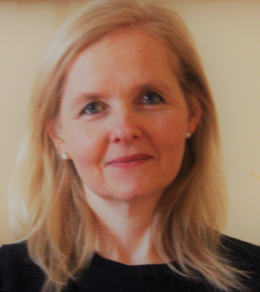

Suzanne, a registered dietitian turning 60, found herself asking how to start a new job after accepting a position at the 800-bed teaching hospital where she started her career 30 years before.
This is our third blog for our “Inside Voices” series, periodic interviews of professionals at different points in their careers – and in the employee lifecycle – to hear about their experiences and insights around skills and competencies.
One month before Suzanne, a registered dietitian (RD), turned 60, she went back to work at the 800-bed teaching hospital where she started her career 30 years earlier. Although she had written the training program the hospital still uses for its RD interns, Suzanne’s patient notes were reviewed daily for the first six months. When you have deep expertise, but are new to today’s technologies, practices, and protocols, how do you confidently learn and contribute in a new job?
In this “Inside Voices” edition, we share Suzanne’s insights on what skills and knowledge are useful when stepping back into full-time work later in one’s career.
Avilar: You started your career at this teaching hospital 30 years ago. What was that like?
Suzanne: I was an intern for six months before having the good fortune of being hired at the end of my training. I started out in the hospital and then moved to the Shock Trauma Center. At that time, in the early 1990s, there were a lot of discoveries and innovations in critical care treatments. We were often on the cutting edge of therapies being developed. Specialty formulas, especially for tube feeding, were being developed and companies gave them to us to try.
Avilar: Why did you leave that job?
Suzanne: At the start, there were many things to learn, building on my didactic education. After several years, the novelty wore off and the innovation slowed. I got tired and burned out, feeling like I was doing work that was rote. I was involved in the internship program and loved that, but after 11 years it was time for me to try something new.
Avilar: What have you been doing since then?
Suzanne: I left the hospital to become a nutrition product sales rep. I got to use my clinical background to promote products to physicians in offices and hospitals.
When I had my first child, I stepped out of the full-time workforce, but I had been commissioned into the National Guard in 1988 and I continued that work for 21 years. I also picked up intermittent projects, including helping a friend who built ground-breaking software for dietitians that they could use on a hand-held device.
More recently, I held a full-time position for five years providing nutrition counseling and education via the telephone to home-bound and rural patients of a managed healthcare company.
Avilar: When looking for employment last year, what were your priorities?
Suzanne: My heart has always been with inpatient work. Given my age, I thought that if I went back to full-time work, it would probably be my last professional job in dietetics. So, I wanted to do inpatient dietetics.
Avilar: How well prepared were you for the job?
Suzanne: Though I didn’t expect to go back to work in dietetics, I had stayed current with my continuing education units to maintain my credentials as an RD and for my state license, “just in case.” I kept up with the field in general, but I really didn’t keep up with the changes in critical care nutrition.
This job took me back to a familiar place, literally and figuratively, but enough had changed that I had to be focused. Medicine is different today. Science has evolved. But I would say I came into the role with a strong foundation.
For example, in critical care there is a treatment for kidney failure called continuous renal replacement therapy, or CRRT. It’s similar to dialysis but runs 24 hours a day instead of a few treatments a week. Thirty years ago, two doctors brought CRRT to the trauma unit in the hospital. Since there were only two RDs at the time, the doctors really relied on us, and I learned about CRRT from the start.
They were also the forerunners in adult trauma for something called extracorporeal membrane oxygenation, or ECMO. It is a form of life support originally used for babies with immature lungs. I was there when the doctors introduced ECMO to adults who were in acute respiratory distress. Now, all around the hospital, there are pediatric and adult patients on ECMO. I was fortunate that, early in my career, I learned how to address the nutritional needs of ECMO patients.
Avilar: In the first six months, what skills and knowledge did you gain? How did you build that skillset and knowledge?
Suzanne: It’s been a mental tap dance. I used a “fake it ‘til you make it” approach to get through! There were really three categories of things to learn: new treatments, updated treatments, and new skills.
For example:
- CRRT treatments haven’t changed that much. For treatments I was familiar with, I just needed to shake the dust off. I keep the department nutrition assessment guides handy, to have the standards available for ready reference.
- The use of a drug called oxandrolone is new to me. It’s a steroid for patients with spinal cord injury that helps slow muscular deterioration.
- The computer system was completely new. When I entered my career, we physically wrote in patient charts and I had a rhythm, a flow for recording the information. For the computer system, I was given a block of training. But that was not helpful to me at all because I had no prior knowledge of, or experience with, an electronic medical record. Because it didn’t have familiar elements to other programs I used, it was overwhelming.Second, that particular software is comprehensive and there are several ways to access information. So, as I trained with different people, they each had a favorite way of using the system. While it was good to know that there were options, it was like taking a different route to work every day. It took some time to discover the best approach for my workflow.My learning curve felt like a 90-degree angle. With time, I felt more comfortable with the software and am now able to use it effectively. I’ve been able to personalize the tabs across the top of the menu bar so the flow is in the order I used to write notes. Just recently, I’ve started using “smart phrases.” With just a click, the frequently used phrase is inserted into my documentation, so I don’t have to type it over and over.
Now, I’m over the hump. For the first six months, my notes were reviewed and scrutinized every day. A supervisor also needed to approve my orders before they were submitted. At this point, my work is just checked as part of our normal quality assurance measures.
Avilar: What’s next for you in this job?
Suzanne: Well, it’s about to come full circle. In my role, there is an expectation of a certain amount of professional involvement required. That causes professional growth while supporting the team and hospital.
The person who has been running the internship program is about to step away from that role as she starts a doctoral program in nutrition. It looks like we’ll go back to the model we used 30 years ago, with two people collaborating to run the program. One of my colleagues is interested in taking the helm; she has an investment in the program that is current. I will join her, with an investment that’s historic. I taught, precepted, and mentored numerous people through the program years ago, and three of them are still on the clinical nutrition staff.
Avilar: What advice do you have for how to start a new job late in one’s career?
Suzanne: I have two pieces of advice. First, remember that, to have been hired into the role, you have skills and qualifications that are a good fit for the role. You can bring wisdom and a level of experience that can foster the culture and the goals of the team and the department.
Second, particularly when you’re a little older, you might find that you have to bite your tongue from all the “young stuff” that’s going on. You might think, “Oh my gosh! This is like my children!” So, the advice is to strike a balance so that you’re a colleague at work, and not a parent.
Avilar: What advice do you have for managers bringing on employees who are re-entering the workforce after a gap?
Suzanne: Hopefully, the manager has the insight and expertise to know if the person is going to fit well into the group. They are the gatekeepers for that.
If someone is a good fit, you don’t want age to be a stumbling block. Just because some people on your team are a certain age doesn’t mean they don’t have anything to offer any more.
Avilar: Any last thoughts?
Suzanne: Particularly in this day and age, when older people are working longer, sometimes those managers need to take a step back and ask themselves, “What value can this person bring that someone younger or less experienced can’t?”
It’s not just inclusion and diversity for people of different cultural backgrounds, religious backgrounds or skin color. Your age is part of it too. It’s part of the circle of inclusion.
Thank you, Suzanne, for sharing your story! We wish you all the best for what’s next in your career!
If you’re looking for ways to support and engage employees of any background or generation, download our Competency Management Toolkit to get started or contact us to find out how Avilar’s WebMentor Skills™ competency management systems can help.
RELATED RESOURCES
Bridging Generational Differences in the Workplace
Why Are Companies Turning to Older Workers? Should You?
How to Create Learning Opportunities for the Full Employee Lifecycle
Inside Voices: How to Identify Transferable Skills for a New Career
Inside Voices: What Makes a Good Mentor at Work for a College Student