
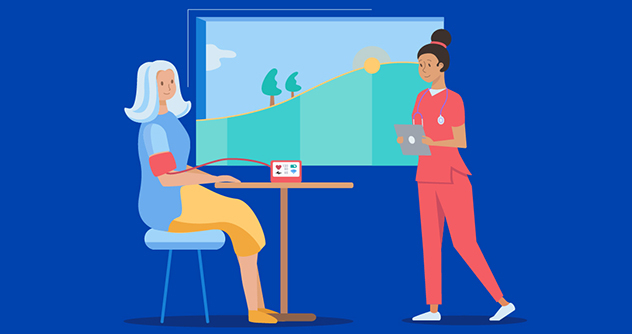
It’s an image that evokes memories of a simpler time—a white-coated physician ushered into a patient’s living room, perhaps offered a cup of tea before he reached for the stethoscope around his neck.
House calls may sound like a blast from the past; in reality, they’re the wave of the future. Mobile health (mHealth) apps make it easier than ever for providers to treat patients in the comfort of their own home, replacing the “doctor’s bag” of yesteryear with a smartphone or tablet and high-tech, portable medical devices.
Yes, it’s true—house calls are coming back in style.
Retro Is the New Home Healthcare
Pre-1950, nearly half of all doctors’ visits were house calls. So why are we returning to pre-Internet business model? There are several factors.
Technological advances in mobile healthcare
The advent of the smartphone, as well as the mHealth apps that came after, transformed the way practitioners could do business. Suddenly, diagnoses could be had at the push of a button, electronic health records (EHRs) followed the patient wherever they went, and wearable tech—such as heart rate, blood pressure, and blood glucose monitors—could immediately alert a home healthcare tech to a potential problem.
Medical devices have also become more high-tech. Ultrasound and EKG machines that used to take up half a room are now able to fit easily in the backseat of the practitioner’s car. It’s easier than ever to bring care to patients, rather than the other way around.
Aging baby boomers
As the most populous generation ages toward retirement, they become more dependent on medical services. However, these baby boomers also make up a significant part of the current workforce. According to the National Council on Aging (NCOA), we face a huge shortfall of providers by 2020, and it’s highly unlikely that we’ll come close to hitting the benchmark in that time.
The fact that the supply can’t meet the demand is concerning. However, the focus has shifted to making sure the providers we do have are empowered to utilize technology and mHealth apps to bridge the gap. This means a heavier reliance on artificial intelligence (AI) technology, video-based care, and, yes, even house calls.
Healthcare consumerism
While many healthcare or pharmaceutical companies have long been marketing to the public like consumer products or services do, the patient experience when working with providers and receiving care has often been a far cry from what they see on TV.
But patients have started holding healthcare providers to the same standards they do for any other paid service. Patients, or “healthcare consumers,” don’t want to drive to doctor’s office, find parking, sit in a crowded waiting room, waiting idly for a doctor to spend just 15 minutes with them.
Armed with the knowledge that they have the option to get the checkups they need in the comfort of their own home, patients have shown enthusiasm for this “retro” style of healthcare. And they want all of this at a fair price, without compromising their standard of care. House calls fit the bill on all fronts.