
Unemployable Graduate
Advertisement
  • Home
  • Education
  • Economics
  • Public Policy
  • Workforce
  • Videos
  • Privacy Policy
  • Contact Us
No Result
View All Result
Unemployable Graduate
  • Home
  • Education
  • Economics
  • Public Policy
  • Workforce
  • Videos
  • Privacy Policy
  • Contact Us
No Result
View All Result
Unemployable Graduate
No Result
View All Result
Home Workforce

Five Ways AI Can Help Close the Skills Gap of Your Workforce

August 4, 2023
in Workforce
0
Five Ways AI Can Help Close the Skills Gap of Your Workforce
189
SHARES
1.5k
VIEWS
Share on FacebookShare on Twitter


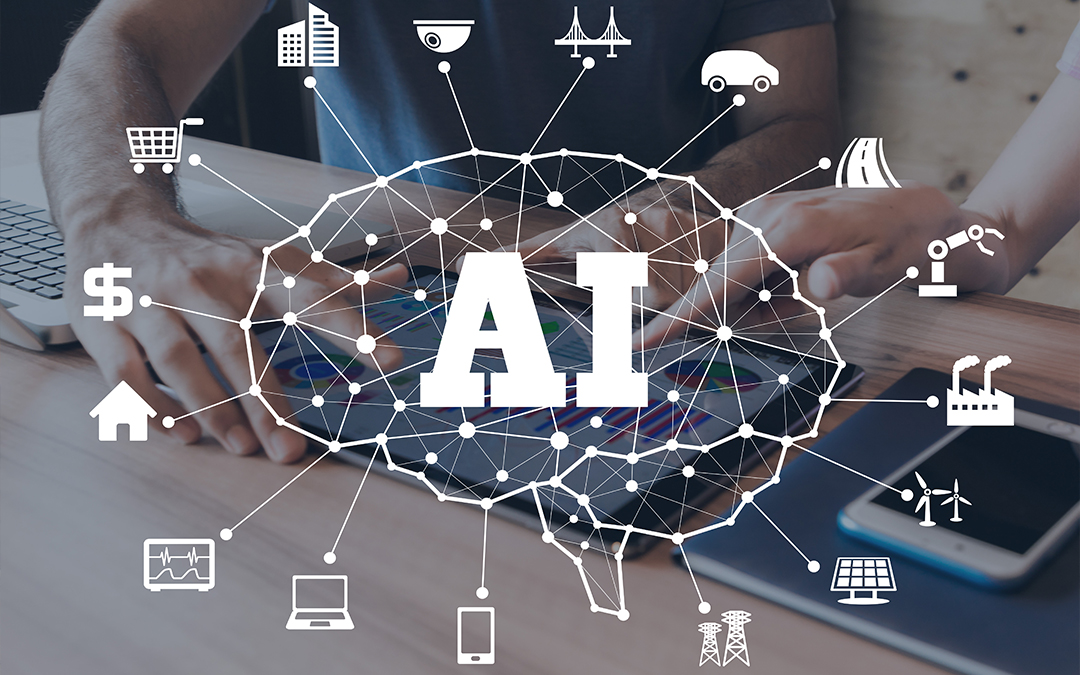
Business leaders are exploring how to responsibly adopt AI to augment worker contributions. How can AI help close the skills gap of their workforce?

Though artificial intelligence (AI) has been around for decades – with technological advancements appearing in fits and starts over the past 50 years – nothing has quite captured the imagination of the world like Open AI’s release of ChatGPT in late 2022. Suddenly, individuals, businesses, community leaders, and government organizations were caught up in the frenzy of discovery, as simple online queries returned ideas and answers to a broad range of prompts. Just as suddenly, news stories hyped both the promise and fears of generative AI – including loud proclamations that AI will soon replace a vast number of workers.

Now, nearly nine months removed from the ChatGPT release, more rational heads are prevailing. Business and HR leaders are curious, learning, and imagining how to responsibly adopt AI to augment worker contributions. Many, in fact, are exploring ways AI can help close the skills gap of their workforce.


What’s Causing the Workforce Skills Gaps?

There are numerous factors contributing to workforce skills gaps today. Some can be attributed to outside forces. Others reflect the strength of a company’s skills and competency management program. Here are a few examples:

  • National Labor Shortage. In July 2023, the U.S. Chamber of Commerce said, “there are too many jobs without people to fill them.” Labor force participation is down and there are 75 workers for every 100 job openings in the U.S., explains the Chamber. Employers in transportation, health care and social assistance, and the accommodation and food sectors have the highest numbers of job openings. Unless the work can get done with fewer people or more people can be enticed to the work, employers will have a gap in the talent required to complete the work.
  • Pace of Technology Advancements and Market Changes. Technology advancements (including AI) continue a rapid evolution. The global marketplace is constantly evolving. Businesses – and their workforces – need to continually learn and adapt to be successful. As quickly as employees master skills and competencies, it may be time to consider upskilling or reskilling to keep up or catch up to broad market changes.
  • Outdated Skills Requirements. There have always been both durable and perishable skills, where durable skills are generally relevant for seven years or more and perishable skills may only be relevant for two years. According to The World Economic Forum’s 2023 Future Jobs Report, released in April 2023, the shelf life of skills is getting shorter. The report predicts that by 2027, nearly 70 million new jobs will be created globally and 83 million will be eliminated. Many companies struggle to track immediate, near-term, and longer-term skills needs – and that task will only get more difficult with accelerated change.
  • The Great Retirement. Baby Boomers, those born between 1946 and 1964, are “aging out” of the workforce and retiring, taking their skills and experience with them. According to J2T Financial Recruiting, 10,000 Boomers reach retirement age every day. And 75 million Boomers are expected to retire by 2030, paving the way for what is now called “The Great Retirement.” These workers often hold higher positions in the company, managing teams and projects. When their knowledge and skills are not systematically shared before retirees depart – and/or, if new leaders are not prepared to step in – companies may experience a drop in knowledge and productivity.


How AI Can Help Close the Skills Gaps

AI is already incorporated into many HR and learning tools – and many more are being developed. AI is very good at processing massive amounts of data and finding trends, taking on repetitive tasks so humans are freed to do higher-value work, and, more recently, augmenting human creativity. With those attributes, AI can be harnessed to help close workforce skills gaps in many ways. Here are just a few.

1. Staff Augmentation. Especially with our current widespread labor shortage and predicted smaller workforce once the Baby Boomers retire, “AI is absolutely becoming a tool that can help combat the labor shortage and enhance workforce performance,” says our CEO, Tom Grobicki, in a recent LinkedIn article. “By augmenting human talent, AI can enhance employees’ abilities to complete tasks faster,” he says.

2. Non-traditional Job Candidate Identification. AI is already a powerful recruitment tool, as many applicant tracking systems use AI to identify targeted keywords, phrases, and candidate attributes in job applications. AI can also be helpful in identifying non-traditional job candidates, which may become an even more important recruitment approach as labor force participation drops. Use AI tools to review and propose edits to your job descriptions. Root out unintentional bias that can get in the way of applications from older workers, neurodivergent professionals, culturally diverse personnel, those without a college degree, or adults returning to the workforce. Tuned correctly, AI can speed up and improve the recruitment process, quickly matching job requirements with available talent across traditional and non-traditional talent pools – and within your own workforce.

3. Advanced Skills Gap Analysis. AI-powered tools could be used to analyze all job openings in a particular industry and in a particular geography, to see skills that are predominant today as well as emerging skills. By combining results of your employee skills assessments with the job openings data, AI can forecast future skill needs and help analyze how well (or how poorly) your workforce is keeping up with current and anticipated skills in your market. With jobs and skills evolving quickly, AI may help companies to fill current and future gaps by shaping targeted training or identifying current employees to promote from within.

4. Personalized Learning Plans. AI is excellent at identifying trends. By analyzing individuals’ learning preferences and patterns, AI-powered tools could recommend personalized learning paths to close identified skills gaps. By identifying and recommending relevant training options that fit with an individual’s learning style, AI can help enhance learning and performance outcomes.

5. Accelerated Reskilling Initiatives. AI can be used to accelerate and improve training and reskilling programs. As one example, the U.K.’s National Health Service is exploring the use of AI to accelerate the onboarding of healthcare professionals. AI can be used, too, to analyze training and reskilling outcomes, providing feedback on which initiatives deliver the strongest (and weakest) performance boosts, so you can optimize learning opportunities aligned with your skill development goals.


Truly, we’re just in the early stages of widespread application of AI to advance workforce skills and help close the skills gap. The sooner we all get informed and involved, the better positioned we’ll be to adopt the tools and applications that make the biggest difference for our companies and team.

Of course, it (almost) goes without saying: AI is only as good as the data it ingests. Even the much-lauded ChatGPT has come into question recently, as researchers found a significant drop in accuracy in a matter of months. For now, it’s wise to continue to see AI as a tool to augment human analysis and decision-making, while remaining vigilant to ensure that AI outputs are helpful and aligned with your company goals and values.


Are you curious about AI and skill development? So are we! If you’re ready to prepare your team and workforce to adopt a skills and competency-first approach to future skillsets, download our Competency Management Toolkit for ideas on getting started. Or contact us to find out how Avilar’s WebMentor Skills™ competency management systems could support your next steps and close the skills gap of your workforce.


RELATED RESOURCES
Generative AI: Friend or Foe to the Workforce?
Reskilling, Upskilling and New Skilling: When to Use Each
Closing the Skill Gap with Continuous Learning
Comparing Durable vs Perishable Skills Training




Source link

Related articles

Building a Standout Employer Brand:Strategies for HR Teams

Building a Standout Employer Brand:Strategies for HR Teams

April 11, 2024
What Is Total Compensation?

What Is Total Compensation?

April 10, 2024
Share76Tweet47

Related Posts

Building a Standout Employer Brand:Strategies for HR Teams

Building a Standout Employer Brand:Strategies for HR Teams

April 11, 2024
0

In today’s competitive job market, attracting and retaining top talent is more challenging than ever. One of the most powerful...

What Is Total Compensation?

What Is Total Compensation?

April 10, 2024
0

Total compensation represents the complete value of all rewards and benefits an employee receives from their employer in exchange for...

Tackle the 3 A’s – Absence, Agent Burnout, and Attrition

Tackle the 3 A’s – Absence, Agent Burnout, and Attrition

April 10, 2024
0

The role of the contact centre agent is challenging and can lead to burnout. This results in high...

WorkForce Software Announces Thirteenth Annual VISION Conference as Investments in Global Workforce Management Technology Increase for Employers in 2024

WorkForce Software Announces Thirteenth Annual VISION Conference as Investments in Global Workforce Management Technology Increase for Employers in 2024

April 9, 2024
0

LIVONIA, MI – APRIL 3, 2024 – WorkForce Software, the #1 rated workforce management solution for large employers, is excited...

South Dakota begins third round of Freedom Works Here ads with “Building in America” – Drgnews

South Dakota begins third round of Freedom Works Here ads with “Building in America” – Drgnews

April 9, 2024
0

South Dakota begins third round of Freedom Works Here ads with “Building in America”  Drgnews Source link

Load More
  • Trending
  • Comments
  • Latest
Hilarious video explains principles of economics

Hilarious video explains principles of economics

August 21, 2022
HVAC Maintenance Checklist Templates: Download & Print for Free!

HVAC Maintenance Checklist Templates: Download & Print for Free!

May 18, 2023
Public Knowledge Responds to MPA Chairman and CEO Charles Rivkin on Site-blocking

Public Knowledge Responds to MPA Chairman and CEO Charles Rivkin on Site-blocking

April 10, 2024
Policy & Politics Journal Blog

Policy & Politics Journal Blog

August 14, 2022
Policy & Politics Journal Blog

Policy & Politics Journal Blog

0
Spotlighting interpretive approaches to public policy scholarship – Dr Tiffany Manuel on intersectionality – Policy & Politics Journal Blog

Spotlighting interpretive approaches to public policy scholarship – Dr Tiffany Manuel on intersectionality – Policy & Politics Journal Blog

0
Policy & Politics Highlights collection on policy and regulation August 2022 – October 2022 –free to access – Policy & Politics Journal Blog

Policy & Politics Highlights collection on policy and regulation August 2022 – October 2022 –free to access – Policy & Politics Journal Blog

0
Special issue blog series on Transformational Change through Public Policy. – Policy & Politics Journal Blog

Special issue blog series on Transformational Change through Public Policy. – Policy & Politics Journal Blog

0
Bernstein, The greatest 5 min. in music education

Bernstein, The greatest 5 min. in music education

April 11, 2024
The policy impact of dissension within the Violence Against Women and Girls Movement – Policy & Politics Journal Blog

The policy impact of dissension within the Violence Against Women and Girls Movement – Policy & Politics Journal Blog

April 11, 2024
Economic Surprises Could Fuel Fed Deja Vu for the 2010s – The Wall Street Journal

Economic Surprises Could Fuel Fed Deja Vu for the 2010s – The Wall Street Journal

April 11, 2024
Building a Standout Employer Brand:Strategies for HR Teams

Building a Standout Employer Brand:Strategies for HR Teams

April 11, 2024

Recent News

Bernstein, The greatest 5 min. in music education

Bernstein, The greatest 5 min. in music education

April 11, 2024
The policy impact of dissension within the Violence Against Women and Girls Movement – Policy & Politics Journal Blog

The policy impact of dissension within the Violence Against Women and Girls Movement – Policy & Politics Journal Blog

April 11, 2024

Categories

  • Economics
  • Education
  • Public Policy
  • Videos
  • Workforce

Newsletter

© 2022 All right reserved by unemployablegraduate.com

No Result
View All Result
  • Home
  • Education
  • Economics
  • Public Policy
  • Workforce
  • Videos
  • Privacy Policy
  • Contact Us

© 2022 All right reserved by unemployablegraduate.com

We use cookies on our website to give you the most relevant experience by remembering your preferences and repeat visits. By clicking “Accept All”, you consent to the use of ALL the cookies. However, you may visit "Cookie Settings" to provide a controlled consent.
Cookie SettingsAccept All
Manage consent

Privacy Overview

This website uses cookies to improve your experience while you navigate through the website. Out of these, the cookies that are categorized as necessary are stored on your browser as they are essential for the working of basic functionalities of the website. We also use third-party cookies that help us analyze and understand how you use this website. These cookies will be stored in your browser only with your consent. You also have the option to opt-out of these cookies. But opting out of some of these cookies may affect your browsing experience.
Necessary
Always Enabled
Necessary cookies are absolutely essential for the website to function properly. These cookies ensure basic functionalities and security features of the website, anonymously.
CookieDurationDescription
cookielawinfo-checkbox-analytics11 monthsThis cookie is set by GDPR Cookie Consent plugin. The cookie is used to store the user consent for the cookies in the category "Analytics".
cookielawinfo-checkbox-functional11 monthsThe cookie is set by GDPR cookie consent to record the user consent for the cookies in the category "Functional".
cookielawinfo-checkbox-necessary11 monthsThis cookie is set by GDPR Cookie Consent plugin. The cookies is used to store the user consent for the cookies in the category "Necessary".
cookielawinfo-checkbox-others11 monthsThis cookie is set by GDPR Cookie Consent plugin. The cookie is used to store the user consent for the cookies in the category "Other.
cookielawinfo-checkbox-performance11 monthsThis cookie is set by GDPR Cookie Consent plugin. The cookie is used to store the user consent for the cookies in the category "Performance".
viewed_cookie_policy11 monthsThe cookie is set by the GDPR Cookie Consent plugin and is used to store whether or not user has consented to the use of cookies. It does not store any personal data.
Functional
Functional cookies help to perform certain functionalities like sharing the content of the website on social media platforms, collect feedbacks, and other third-party features.
Performance
Performance cookies are used to understand and analyze the key performance indexes of the website which helps in delivering a better user experience for the visitors.
Analytics
Analytical cookies are used to understand how visitors interact with the website. These cookies help provide information on metrics the number of visitors, bounce rate, traffic source, etc.
Advertisement
Advertisement cookies are used to provide visitors with relevant ads and marketing campaigns. These cookies track visitors across websites and collect information to provide customized ads.
Others
Other uncategorized cookies are those that are being analyzed and have not been classified into a category as yet.
SAVE & ACCEPT