
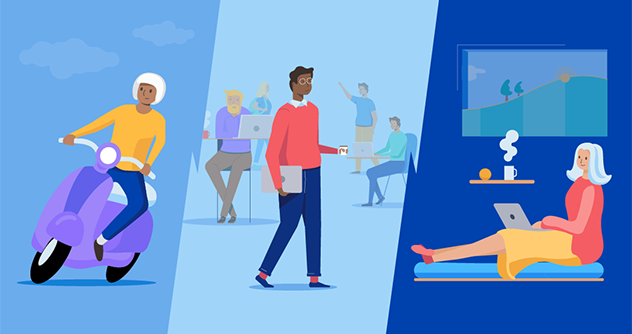
The digital revolution has forever changed the way we work, making the era of the 9-to-5 work day and desk-based worker a thing of the past. Thanks to advances in technology, new and flexible methods of working are gaining popularity—telecommuting, remote work, deskless work, and mobile work. But while these terms may seem interchangeable, there are some subtle differences.
The deskless workforce largely refers to workers who don’t sit at a desk or in front of a computer to do their jobs, and represents 2.7 billion people in the global working population. Mobile workers have their core job take place outside the office, such as at worksites or traveling from one location to another. Telecommuters occasionally work from another location but spend the rest of the time in the office. Remote workers, on the other hand, perform their office-type jobs from another location, such as at home.
Each of these approaches requires different capabilities. Understanding which definition applies to your workforce will ensure you select a technology platform that meets their communication, collaboration, and productivity needs.
What is the Deskless Workforce?
The deskless workforce, estimated to be 80% of all workers globally, refers to jobs that don’t require sitting at a desk or computer in order to be completed. Deskless workers can perform their jobs in a single location or multiple locations during the course of a day, but are referred to as mobile workers if they do the latter. The mobile workforce, which might include field workers and home health providers, is part of the broader global deskless workforce.
Some of the top industries for deskless workers include agriculture, retail, manufacturing, construction/real estate, education, and restaurants/hospitality. These businesses rely on robust scheduling software to ensure that their employees are managed efficiently. These solutions will often include or integrate with payroll or timesheet software to ensure end-to-end management of deskless workforces.
Even though they aren’t doing the majority of their work from a computer, deskless workers benefit from digital tools. Devices such as smartphones, tablets, and wearables can help deskless workers accomplish their daily goals. These tools also help to connect deskless workers to each other and the office. So not only can they make workers more productive, but they can build a stronger sense of community among a distributed workforce.
As people are increasingly drawn to flexible employment options, there will be a stronger demand for technology solutions built to support the unique needs and challenges that face these deskless workers.
What is the Mobile Workforce?
The term “mobile workforce” usually describes work that can be done outside the office. More specifically, it describes jobs in which a worker starts out in one geographic location and ends up in another, or travels between multiple locations in a typical workday.
Home services, healthcare, IT, utilities, and construction are just a few of the industries in which mobile workers are essential. People in these roles spend nearly all their time outside the office and rely exclusively on mobile devices to interact with customers, partners, suppliers, or their home office.
If your workforce is primarily mobile, you need technology that offers real-time visibility into how everyone is working—when they arrive at a job, when they finish, when they are in route to the next location, etc. The ability to assign jobs based on a worker’s skills, certifications, location, and customer preferences can ensures you send the right person to the job.
With mobile workforce management, companies can allocate jobs based on the factors that mean the most to the business, whether it’s customer satisfaction, fast service, employee satisfaction, cost reduction, or another KPI. When effective technology is put in place, administrators and dispatchers can group appointments by location, send real-time scheduling updates, and keep mobile workers informed throughout the work day, no matter where they are.